


Rolling Stone's first festival gave fans a fair, flexible way to resell tickets at face value on Tixr, blocking bots and scalpers while keeping every transaction inside its own ecosystem.
Rolling Stone officially entered the festival world with Stateside, a first-of-its-kind Americana celebration on Fourth of July in Kingston, New York. Set along the Hudson River at Hutton Brickyards Riverfront Hotel and Venue, the debut festival paired a single headline performance by Noah Kahan with two stages, a local food and artisan market, and a fireworks finale to close out the night.
The format was boutique by design. VIP and Platinum guests could extend the weekend with on-property stays and exclusive Rolling Stone-hosted programming, turning a one-day festival into a full holiday getaway. That combination, a marquee lineup and a resort-style setting with limited capacity, meant demand for tickets far outpaced supply, and the festival sold out shortly after launch.
For a highly anticipated event carrying the Rolling Stone name, ticketing mattered. Leaning on Tixr’s expertise running large-scale, high-demand festivals, Stateside took a unique approach to ticket access and resale to ensure real fans had a fair shot at attending.
A Face-Value Resale Marketplace, Built for Real Fans
With capacity capped by the venue's setting and demand driven by the headliner, Stateside had very little room between a sellout and secondary market chaos. Protecting the experience meant planning for resale before the event, not reacting to it afterward.
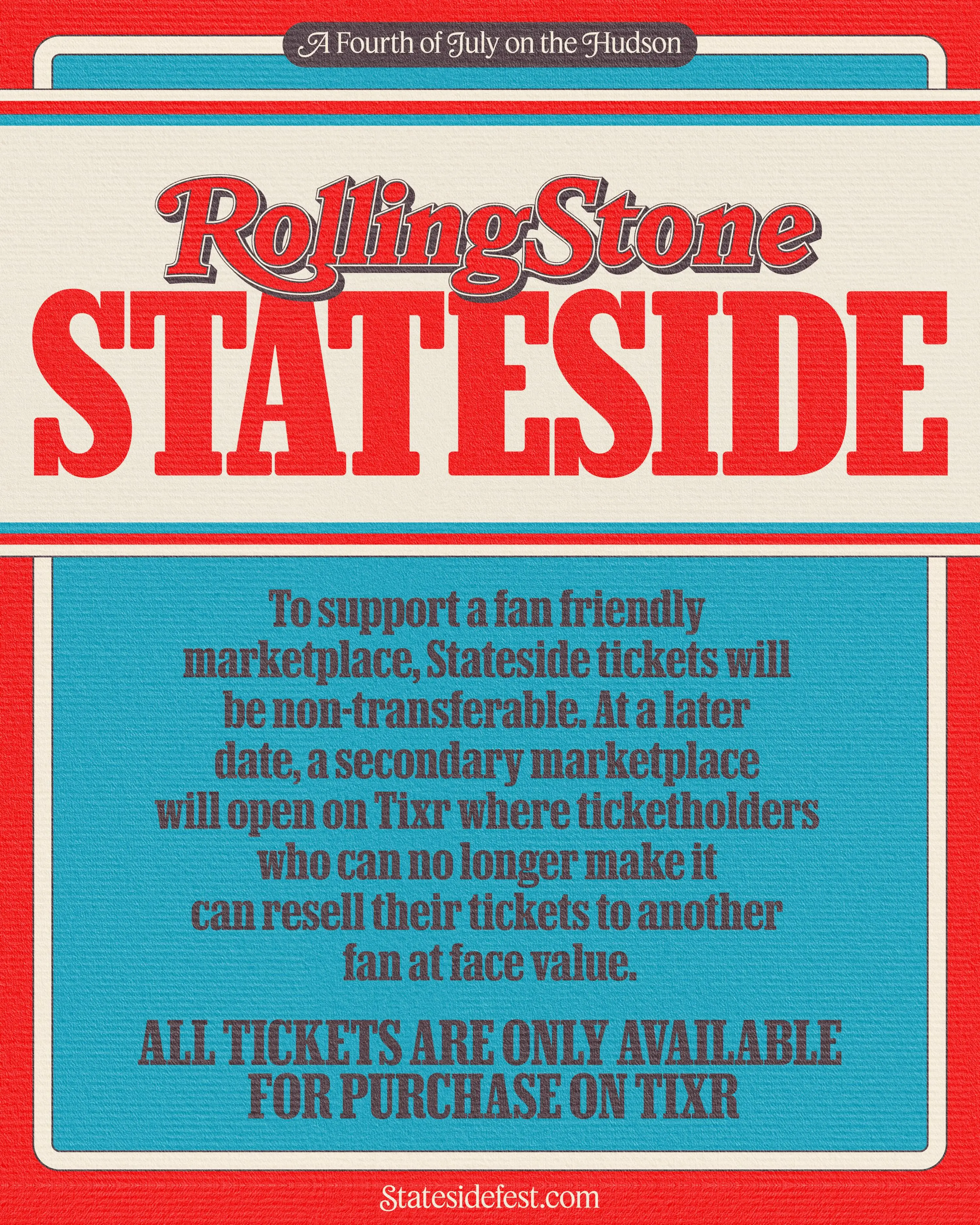
Stateside built its ticket strategy around one priority: keep tickets in the hands of fans who planned to use them. Tickets launched as temporarily non-transferable, cutting off immediate resale on third-party websites and closing the door bots and scalpers rely on.
For fans whose plans changed, Stateside opened up a face-value resale marketplace on Tixr, giving ticketholders a way to recoup the base price they paid and new fans a way to secure verified tickets. Stateside promoted this marketplace directly to fans on social media, steering them away from third-party resale sites and toward Tixr as the only place to buy or sell with confidence.
The approach gave fans flexibility and fair prices with no markup at a time when scalping has made that increasingly rare. It also kept tickets, and the revenue tied to them, inside Stateside's own ecosystem rather than losing both to a third-party reseller.
A Strong Debut as the Resale Reckoning Takes Center Stage
Stateside closed out its first year sold out, with its resale marketplace holding to the same standard the rest of the ticketing strategy did. Roughly 10% of all tickets sold moved through Stateside's face-value marketplace on Tixr, never leaving the organizer's own ecosystem or reaching a third-party reseller.
Stateside's approach comes at a time when resale pricing is under increasing scrutiny, with states including Massachusetts and Washington, D.C. proposing legislation to cap resale markups and fees. Noah Kahan has been a vocal supporter of that effort, publicly backing Massachusetts’s proposed bill and similar legislation in his home state of Vermont.
Stateside offered a real-world example of what fair resale looks like in practice, setting the stage for what could soon become standard across the industry.
Interested in Tixr Resale? Learn more:
- How Tixr Resale Works: An Operational Guide for Event Organizers
- Ticket Resale Isn’t the Problem—Losing Control of It Is

-min.webp)


