


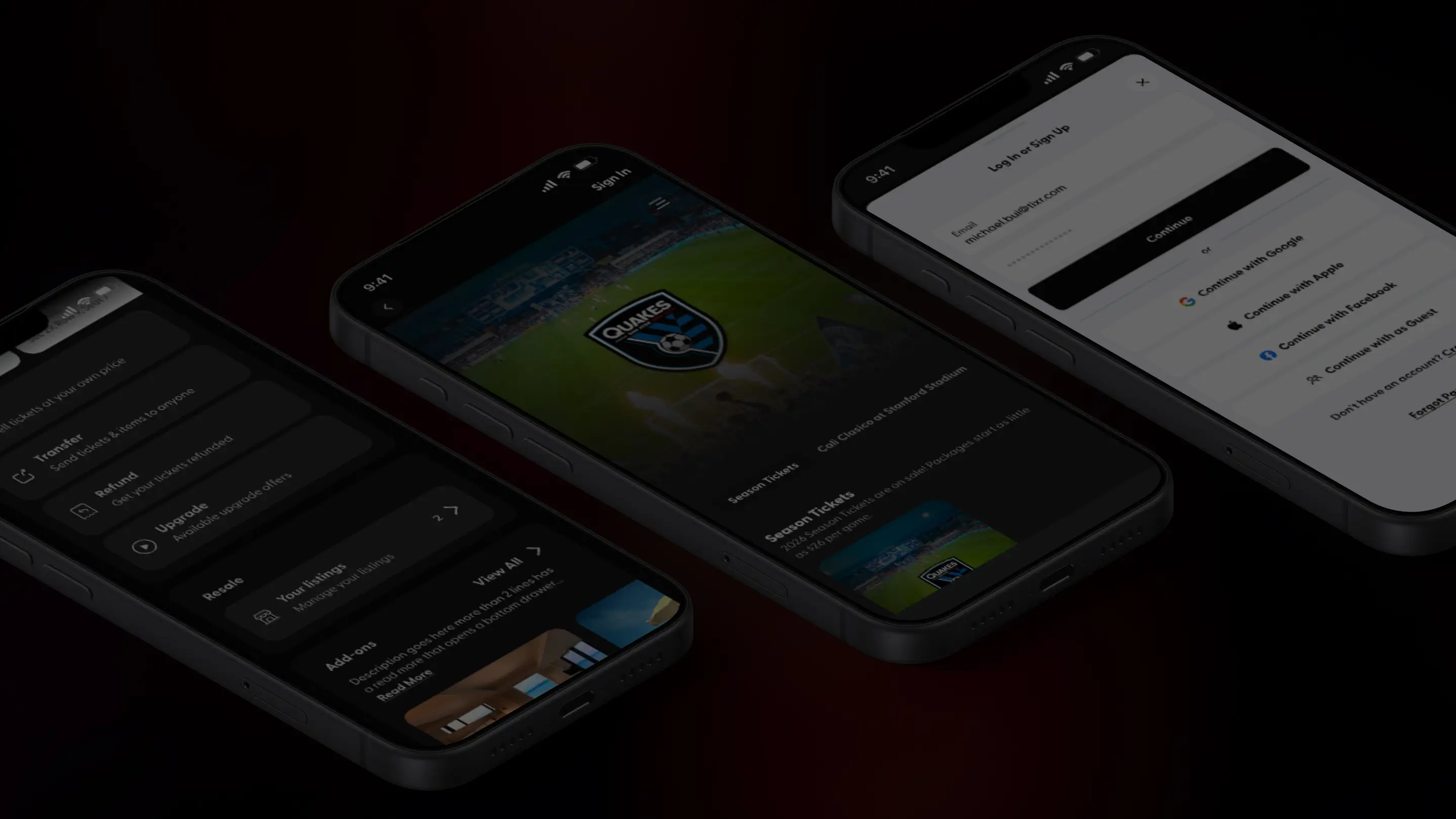
As event formats evolve and expectations rise, more organizers are exploring alternatives to legacy ticketing systems in search of greater flexibility, data access, and unified commerce.
For decades, the live events industry operated within the constraints of what legacy platforms offered. If the system couldn't support it, you worked around it. But as events have become more complex and fan expectations have evolved, those workarounds aren't just inconvenient anymore. They're costing you revenue and control.
What does this lack of flexibility look like in practice? You can't fully access your customer data to market effectively. Your event gets wrapped in platform branding that dilutes trust. Features you need take months or years to ship. And when you try to scale with dynamic inventory, the system fights you at every step.
If you're evaluating alternatives, modern platforms like Tixr offer more flexibility for you and your fans, real control over your data, and tools built to keep pace with how quickly the industry moves.
Where Legacy Systems Create Real Friction
Legacy ticketing systems are outdated platforms built decades ago around a one-size-fits-all model, forcing every event through the same rigid infrastructure regardless of format, audience, or event type. That model creates operational problems at every step. Here's where it hits hardest:
1. Rigid Infrastructure
Legacy platforms were designed around static ticket types and predefined workflows. If your event needs anything beyond basic admission—like reserved seating across multiple venues or post-purchase flexibility—you're either hacking together workarounds or settling for less than what fans expect.
Your platform should bend to fit your event, not the other way around.
2. Brand Dilution
When fans land on a generic event page or checkout flow that looks like every other event on the platform, trust weakens. They're not sure if they're buying from you or from the ticketing company. That hesitation costs conversions, especially as fraud and resale abuse make buyers more cautious.
Your event has its own identity. Your ticketing experience should reflect that from the first click.
3. Fragmented Commerce
If tickets live in one system while parking, merch, VIP access, or travel get handled elsewhere, you're creating friction fans didn't ask for. That leads to lower order value, drop-off between systems, and less visibility into what fans actually want.
For large-scale events, this fragmentation complicates operations and leaves revenue on the table.
4. Slow Innovation
When feature updates are tied to infrequent releases, you're constantly behind. Fan behavior shifts, new revenue opportunities emerge, and the industry adapts. If your platform can't keep up, you're stuck waiting for features that may not arrive for months or years.
In a landscape where expectations evolve quickly, slow iteration is a competitive disadvantage.
Why Organizers Choose Tixr Over Legacy Ticketing
Tixr is a modern event commerce platform, not just a ticketing processor. The Tixr platform adapts to your event, giving you flexibility where legacy systems are rigid, customization where they're fixed, and continuous innovation where they move slowly.
1. Speed to Innovate and Future-Ready Technology
At Tixr, we prioritize continuous evolution based on organizer feedback and real-world event use, supporting everything from intimate venues to major league sports teams. That means actively incorporating fan behavior insights, modern commerce patterns, and emerging technologies as the industry evolves. It also means listening to feedback from the events we power and prioritizing features that solve real problems you're facing today, from loss of revenue to ticketing fraud.
2. Foundational Tools, Built for Modern Operations
Every ticketing platform has some version of the standard toolkit. The question is whether those tools actually work the way modern events require.
Tixr is built for flexibility, speed, and day-to-day control. Organizers can build events quickly, self-serve changes, and make real-time updates without being dependent on a ticketing rep or long support queues. Pricing, inventory allocations, holds, access rules, and onsale timing can all be adjusted as conditions change—even mid-campaign.
Reserved seating in Tixr is interactive and visual, not a static map. Pricing can adapt to real-time demand instead of locking you into fixed tiers. Payment plans are native to checkout and work across your entire inventory, not bolted on as an afterthought. Role-based permissions let teams control access across box office, marketing, and external partners without sacrificing oversight.
Tixr also supports international sales with localized checkout experiences and multi-currency capabilities—making it easier to reach global audiences without adding operational complexity.
3. White-Label, Brand-First Ticketing Experiences
Tixr gives you full control over how your event is presented. Custom event pages, branded checkout flows, interactive seat maps, and post-purchase touchpoints all reflect your identity, not Tixr’s. When fans see consistent branding from discovery through entry, the experience feels intentional—driving conversion and building trust.
4. Unified Commerce (Beyond Ticketing)
Selling tickets is just the starting point. Tixr lets you sell the entire experience: parking, merch, food, VIP access, travel, hospitality, and basically anything else fans might want—all in one place.
One transaction can increase cart value, yield cleaner reporting, and ensure fans stay inside your ecosystem. For large-scale events, destination experiences, or anything with multiple layers of access, this is how you capture revenue that often leaks to third parties or gets lost between systems.
5. Post-Purchase Flexibility for Fans (& Organizers)
Post-purchase flexibility is about maintaining control after the sale, keeping tickets, revenue, and fan activity inside your ecosystem while giving fans clear, self-service options as plans change.
At Tixr, we treat primary and secondary ticketing as connected parts of the same system. As a result, the Tixr platform’s post-purchase tools reduce support load, preserve revenue, and give organizers visibility into how tickets move after purchase.
Secondary activity, managed:
- Verified resale: Keep resale transparent and inside your platform. Set pricing rules, enable or disable it entirely, and maintain oversight as tickets change hands.
- Fan transfers: Maintain visibility into who’s attending, even as tickets move between accounts. Track transfers in real time and know exactly who’s showing up.
Self-service changes without support intervention:
- Returns to credits: Convert refunds into future purchases. Set custom eligibility windows and preserve revenue inside your ecosystem.
- Self-service upgrades: Allow fans to move to better seats or higher tiers without contacting support. Define which ticket types qualify and when upgrades are available.
- Add-ons: Let fans purchase parking, merch, VIP access, or other extras after their initial purchase, increasing order value without a new transaction.
Built-in incentives that drive incremental sales:
- Rewards: Encourage fans to sell tickets for you. Offer cash back, points, or exclusive perks when their referrals convert.
You control the rules, the timing, and what's available. Support request volume can drop because fans manage changes themselves. More revenue stays in your ecosystem. And you maintain full visibility into attendee behavior, even after the initial sale.
6. First-Party Data Ownership
You control and have full access to your customer data on the Tixr platform. That includes purchaser and attendee information, behavioral insights across the fan journey, and the ability to export and activate that data for segmentation, retargeting, demand forecasting, and more efficient marketing decisions.
Legacy systems often gate or monetize customer data, forcing you to rely on outdated third-party databases or pay extra for access to information generated by your own events. Some even use that data to promote competing events to the same audience.
Our approach is different. Your data is accessible, portable, and usable, so you can build real direct-to-fan relationships, make smarter decisions over time, and drive repeat attendance without being locked into a closed ecosystem.
That access translates into clearer visibility across the fan lifecycle. Fan accounts function as persistent identities across events, giving organizers insight into how purchasers become attendees and how attendees turn into repeat fans over time.
7. Scale & Reliability Under Pressure
High-demand onsales, rapid traffic spikes, and peak entry moments are where ticketing platforms are truly tested. Tixr is built to support high-volume scenarios when it matters most, not just under ideal conditions.
At entry, mobile-first ticket delivery methods like rotating QR codes and NFC tickets enable fast, secure scanning at scale, reducing lines, errors, and fraud during peak ingress.
For organizers, a reliable ticketing platform means high-demand moments run as planned, without emergency fixes, manual intervention, or compromised fan experience.
8. Built-In, Layered Fraud and Scalping Protection
Fraud doesn't happen at just one stage. It shows up during the onsale, in the transfer process, and at entry. That's why we believe no single tool is enough.
At Tixr, we take a multi-pronged approach to fraud prevention:
- Presales and access codes: Control access and build momentum before general onsale
- Waitlist (with optional credit card pre-authorization): Capture demand beyond initial inventory, or use it as your primary onsale strategy to vet buyers.
- Rotating QR codes: Prevent screenshot sharing and duplicate entry attempts
- NFC ticketing: Device-bound credentials stored in mobile wallets that can't be screenshotted or forwarded, preventing reuse
- Verified resale & return to credits: Keep secondary transactions inside your ecosystem where you maintain control
- Post-onsale fraud scrubs: Identify suspicious patterns after purchase but before ticket delivery
Looking Forward
Live events are becoming more experience-driven and operationally complex. Platforms built for flexibility, data ownership, and unified commerce are increasingly essential as the industry moves beyond the constraints of outdated legacy systems.
Tixr represents a shift toward modern event infrastructure designed to adapt to how events operate today, not how they were built decades ago. If you're still on legacy infrastructure, you're already paying the cost—just quietly, every event.
Recap: Tixr vs. Legacy Ticketing
Is Tixr an alternative to legacy ticketing systems?
Yes. Tixr is a modern event commerce platform designed for organizers seeking greater flexibility, brand control, and data ownership than legacy systems provide. Learn more about Tixr's track record as a platform.
What makes Tixr different from traditional ticketing platforms?
Tixr offers unified commerce (selling tickets, parking, merch, travel, and more in one checkout), white-label customization, continuous product innovation, full first-party data ownership, and built-in fraud protection—all within a mobile-first, organizer-controlled platform.
Does Tixr support large-scale and complex events?
Yes. Tixr powers events ranging from intimate venues to major festivals and sports organizations, supporting complex inventory, multi-day formats, hospitality packages, and high-volume onsales.
Can organizers customize the ticketing experience?
Yes. Tixr provides custom-branded event pages, checkout flows, and seat maps, allowing you to create a cohesive, on-brand experience from first click to entry.
Who owns the customer data on Tixr?
You do. Event organizers fully own and control all customer data on Tixr, with complete access to purchaser and attendee information for segmentation, retargeting, and analysis.
How does Tixr help prevent ticket fraud and scalping?
Tixr takes a layered approach to fraud protection, including presales, waitlists with credit card pre-authorization, rotating QR codes, NFC ticketing, verified resale, and post-onsale fraud checks.
Can Tixr sell more than just tickets?
Yes. Tixr’s unified commerce platform allows fans to purchase tickets, parking, merchandise, food, VIP access, travel packages, and more in one place.
Can I switch to Tixr if I'm currently using a legacy system?
Yes. Tixr provides dedicated onboarding support to help you transition smoothly, including migration assistance, staff training, and ongoing optimization as your events scale.
Want to see how Tixr can support your next event? Schedule a demo to explore what's possible together.

-min.webp)


