


Season ticket programs span new season sales, renewals, in-season changes, and gameday ticket operations. Choosing the right platform means evaluating how well it supports each one.
Season ticket holders make up a team's most consistent revenue base and its most visible fan relationship, and the platform managing that relationship affects far more than the initial sale. It shapes how plans are sold and renewed each year, how ticket holders manage their seats throughout the season, how fans get through the gate on game day, and how the team interacts with its fans year-round.
Here's a framework to help sports teams evaluate options and choose a platform built for how season ticket programs actually run.
How to Choose a Season Ticket Platform for Sports Teams
1. Define Your Season Ticket Plan Types, Tiers, and Renewal Timeline
Full-season plans, partial plans, and flex packages typically draw from the same pool of inventory as single-game tickets, so the first question is whether a platform treats season tickets as an extension of that inventory or as a separate system on the side.
A program built on shared inventory gives you one view of what's sold, held, or available at any given moment, whether that seat is part of a season package or a single-game purchase.
Before comparing providers, define how your program actually works:
- What plan types do we need to support: full season, half season, flex, or mini plans?
- How many membership tiers or price levels do we need to track, and how often do they change?
- How does our renewal timeline fit into the rest of our sales calendar?
- Do season ticket holders and single-game buyers need to share a seat map and inventory system, or can they live separately?
Getting clear on these questions upfront makes it easier to identify a platform built for season-long programs from the start.
2. Look for Tools to Grow Your Season Ticket Base
Renewals keep a season ticket program healthy, but growth comes from turning new fans into season ticket holders. The most likely next season ticket holder is often already coming to games: a single-game buyer who returns for three or four matches a year, a group attendee who had a good time, or a fan who bought into one marquee game. The platform's job is to make the step up from single games to a plan feel like a natural next move rather than a fresh start.
That path is smoother when a fan's history carries over. A buyer who already has an account, a seat they like, and a few games under their belt should be able to move into a partial or full plan without re-entering everything or losing what they've already bought into. When single-game, group, and season inventory live on one platform, that step stays continuous for the fan and visible to the team.
Look for a platform that helps a team:
- Turn repeat single-game and group buyers into season ticket holders
- Offer partial plans as an on-ramp before a full-season commitment
- Carry a fan's account, seat history, and preferences into their new plan
On Tixr, single-game, group, and season sales share one system, so a team can move a fan into a plan without starting the relationship over.
3. Confirm the Platform Supports Flexible Payment Plans and Renewal Windows
A season commitment is a bigger ask than a single game ticket, and the right payment structure can be the difference between a fan renewing and a fan walking away. Season ticket platforms should let teams spread payments across installments, with schedules built around a season calendar rather than a single on-sale date.
Renewal periods also come with their own access needs. Returning season ticket holders typically expect a window to renew, and often to move seats, before single-game or new-member sales open. Make sure your ticketing platform supports:
- Private renewal windows using access codes, holds, or dedicated links
- Seat upgrade or relocation options built into the renewal process
- Deposit collection for fans who want to lock in next season early
4. Assess Capabilities Around Group, Suite, and Non-Ticket Revenue
Season ticket holders are rarely a team's only source of ticket revenue, and the same platform should handle everything sold alongside admission. Natively integrated group and suite sales let a rep quote, hold, and process an order in the same system used for season and single-game tickets, so premium and group inventory doesn't get managed through a separate form or a third-party tool.
Ahead of the 2026 MLS season, the San Jose Earthquakes moved their group sales onto Tixr alongside their season and single-game inventory and grew group sales revenue by 60%.
Non-ticket revenue depends on that same integration. Parking, merchandise, hospitality, and food and beverage sell better when a fan can add them in the same checkout they already use for tickets, and keeping those sales in one system means a team reports on them alongside ticket revenue rather than in a separate tool. For the fan, one account holds the whole season: their seats, their parking, and anything else they've bought.
5. Choose a Platform That Can Host Any Event, Not Just Games
A stadium sits empty far more often than it's full, and the platform a team uses for game day can often do more than sell tickets to matches. The same system that runs a sold-out home game should be able to handle a free fan watch party, a summer concert, or a small community event, without a separate setup or a different vendor for each format.
Look for a partner that isn't built around a single use case and is willing to grow with your club, whatever events you want to run now or might want to add down the line.
During the 2026 World Cup break, the San Jose Earthquakes and Houston Dynamo programmed their stadiums with watch parties and concerts on Tixr while no matches were on the calendar. Nearly 46,000 people registered or bought across the two clubs during that window, and 93% of them had never transacted with the club before, turning an open stretch of the calendar into a channel for reaching new fans.
6. Keep Season Ticket Holders Engaged Between Games
Most legacy ticketing platforms treat a season ticket purchase as the end of the fan relationship. For a team, that's a real missed opportunity. Season ticket holders are a club's most committed fans, and the months between the sale and the next gate scan are a chance to keep them close. The platform behind the program can help make the most of that window, giving ticketholders a reason to open it on a Tuesday with no game on the calendar.
What makes that work is bringing commerce and content together. A fan can manage seats, swap out a game they can't attend, or add parking in the same place they check the schedule, read a match preview, or follow along with live scores. Push notifications give a club a direct line to its most engaged supporters, whether that's a renewal reminder, a presale, or news worth opening the app for.
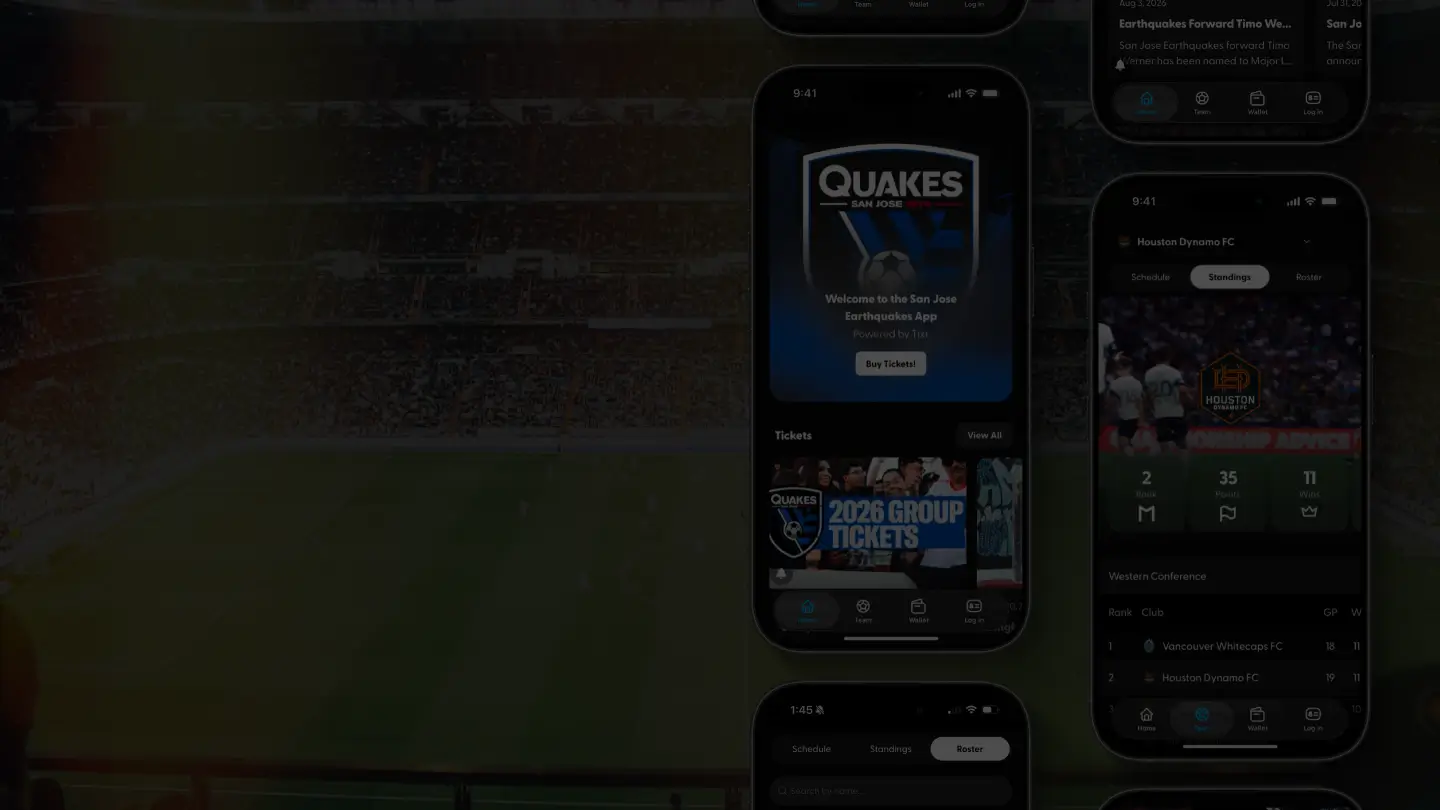
The San Jose Earthquakes, Houston Dynamo and Dash, and Bay FC each launched a fully branded team app on Tixr in under a month, giving season ticket holders and single-game fans one home for tickets and club content. In their first week, fans averaged six minutes per session and more than half opted into push notifications, and across their first season the apps have held an average App Store rating of 4.6.
7. Look for Ways to Serve and Sell to Season Ticket Holders on Gameday
A season ticket holder is already in the building dozens of times a year, which makes gameday the best chance a team has to deepen the relationship and grow per-fan revenue. The platform should make it easy for a fan to do more once they're there, and easy for the team to offer it.
Look for a platform that lets season ticket holders, from their phone and ideally in the team's own app:
- Upgrade their seat for a big game or a special occasion
- Add parking, food and beverage, or merchandise to the same account that holds their tickets
- Move into a premium or hospitality area for a game they want to make more of
When these run through the same account a fan already uses for their tickets, a season ticket holder can act on an offer in a couple of taps instead of standing in a line or hunting down a separate vendor. For the team, every one of those moments is incremental revenue from a fan who's already committed, and it all reports back to the same system as the rest of the season.
8. Prioritize Flexible Post-Purchase Options for Season Ticket Holders
A season ticket is a commitment to a full strip of games, and fans often can't make it to every one. A platform should give season ticket holders self-service options for when plans change:
- Transfers to send a seat to a friend for free
- Exchanges to swap into a different game, for fans whose plan doesn't cover every match
- Verified resale to sell a game they can't attend
When a fan handles these inside the same platform they bought from, the club keeps a clean record of who holds each seat and sets the rules resale runs by, like price limits. Move that activity to third-party sites and that control is gone, while fans take on the markups and fraud risk that come with it.
Within Tixr, transfers, upgrades, exchanges, and resale happen natively and live in the team's app, so a change of plans is a few taps rather than a support request, handled in the same place a fan accesses their seats.
9. Evaluate How the Platform Handles Your Data and Marketing
A season ticket program generates a year-round stream of fan data, and getting full, direct access to that first-party data, rather than reports filtered through a provider, is what lets a team actually use it. Know who renewed, who lapsed, who transfers seats regularly, and which games draw the most demand, and use that to shape the next renewal cycle rather than guessing.
That data is also a team's warmest marketing list. Returning fans are the ones most likely to renew, upgrade, or bring someone new, and a platform should let a team put them to work: segmenting audiences, timing renewal outreach, and feeding those lists into the channels it already runs. The right partner supports that effort on the channels that reach new buyers too, from search engine marketing to visibility in AI-driven search.
Within Tixr, teams keep full first-party ownership of their fan, transaction, and attendance data. That data is fully exportable into a team's own CRM, data warehouse, and marketing tools, so a club can activate its audience across renewals, upgrades, and sponsorship on its own terms.
10. Weigh Speed of Innovation, Not Just Today's Feature List
A season ticket program is a multi-year relationship, so the right question isn't only what a platform does today, it's how fast it keeps getting better. A modern provider that ships new capabilities every season compounds in value over the life of that relationship, while one that stays fixed at the feature set it launched with slowly falls behind what fans expect and what other teams offer.
The gap between the two widens the longer a team stays put, which makes pace of development worth weighing as seriously as any single feature on a checklist today.
11. Assess Onboarding, Support, and the Switch Itself
For a team already running a season ticket program, the biggest question isn't only how a platform performs day to day. It's what happens to thousands of existing season ticket holders during the move. A platform should be able to migrate an existing season ticket base, seats, account records, and purchase history intact, so returning fans keep their seats and their history without disruption.
Ask how a provider handles the transition specifically:
- Can our full season ticket holder base migrate with seats and records intact?
- How long does the migration take, and does it interrupt selling?
- How is our staff trained on the new system before we go live?
- Will we have a dedicated point of contact through the season, not just at launch?
The San Jose Earthquakes moved their entire season ticket base onto Tixr in 60 days, from signed contract to full migration and on-sale, with no season ticket attrition through the transition. A move handled that cleanly means a team's most valuable fans never feel the change, and your team is running on the new system before its next on-sale.
Day-to-day control matters too. A platform's backend should let staff manage pricing, inventory, and entry from wherever they are, not just a back-office desktop. On Tixr, teams manage events from a mobile-friendly backend, so a staffer can adjust a price or check sales from their phone the same way they would at a desk.
Frequently Asked Questions
How do I pick a new season ticket platform?
Legacy platforms treat a season ticket as a one-time sale: process the transaction, deliver the tickets, and the job is done. But a season ticket isn't one purchase, it's a months-long relationship with your most valuable fans. The right platform is built around that relationship, with tools to renew plans, keep fans engaged between games, let them manage their seats, and own the fan data that brings them back next season. Look for a modern platform like Tixr that helps you grow that relationship all season long, not one that stops working once the tickets are sold.
What should a sports team look for in a season ticket platform?
Look for a platform that builds season plans, partial plans, and single-game tickets from the same seat map, supports flexible payment plans and private renewal windows, and gives season ticket holders self-service transfers, upgrades, exchanges, and verified resale. It should also handle group and suite sales, non-ticket revenue like parking and merchandise, and give the team full ownership of its fan data.
How do season ticket platforms handle renewals?
Modern platforms manage renewals through private windows that give returning season ticket holders priority access before single-game or new-member sales open, using access codes, holds, or dedicated links. Strong renewal tools also let fans move to available seats and collect deposits from fans who want to lock in early, without running renewals on a separate system from the rest of the sales calendar.
Can season ticket holders transfer, upgrade, or resell their tickets?
Yes, on a platform built for it. Season ticket holders can send a seat to a friend, upgrade to a better seat, exchange into a different game if their plan doesn't cover every match, or resell a game they can't attend. When those actions happen inside the same platform the ticket was bought from, the team keeps a clean record of who holds each seat and controls the rules resale runs by, rather than losing that activity to third-party sites.
How can a season ticket platform help a team keep fans engaged between games?
A season ticket is one purchase that has to stay meaningful across months of games. Platforms that pair ticket management with club content in a team app give season ticket holders a reason to stay connected between matches, checking the schedule, reading previews, following live scores, and managing their seats in one place, with push notifications giving the team a direct line to its most engaged fans.
What happens to season ticket holders when a team switches ticketing platforms?
A capable platform migrates an existing season ticket base with seats, account records, and purchase history intact, so returning fans keep their seats without disruption. When evaluating a provider, ask how long the migration takes, whether it interrupts selling, and how staff are trained before going live. The San Jose Earthquakes moved their entire season ticket base onto Tixr in 60 days, from signed contract to full migration and on-sale, with no season ticket attrition through the transition.
Can a sports team use its ticketing platform for non-game events?
Yes. A platform built for more than matches can run watch parties, concerts, and community events on the same system a team uses for game day, without a separate setup for each. That lets a team program its venue during open stretches of the calendar, like off-season or a league break, and reach fans who might not buy a game ticket first.
How can my ticketing platform help sell more season tickets?
The most likely new season ticket holder is often already attending games as a single-game or group buyer. A modern platform like Tixr that keeps single-game, group, and season activity together lets a team spot those repeat fans and offer a natural step up into a partial or full plan, carrying the fan's account and seat history into the new plan rather than starting over.
Who owns my fan data on a season ticket platform?
It depends on the platform, and it's worth confirming before signing. Some providers keep fan data behind their own reports or use it to market other events. A team should look for full first-party ownership of its fan, transaction, and attendance data, with the ability to export it into its own CRM, data warehouse, and marketing tools and activate it on its own terms.
How should I evaluate a season ticket platform for the long term?
A season ticket program is a multi-year relationship, so how fast a platform improves matters as much as its current feature list. A provider that ships new capabilities regularly keeps pace with what fans expect, while one that stays fixed at what it launched with falls behind over time. Weigh pace of development alongside price and today's features.

-min.webp)


